P. D. Ouspensky:
Pioneer of the Fourth Way
by Bob Hunter
Eureka Editions, 296 pp.
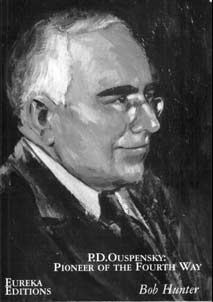
In the history and development of The Fourth Way, the teaching brought by Mr. Gurdjieff to keep the world from destroying itself, P. D. Ouspensky occupies a unique and important place. Ouspensky's In Search of the Miraculous, first published in 1949, two years after he died, and arguably the finest book about a teaching ever written by a student, has served as the primary introduction to the Work for several generations of seekers. During his lifetime Ouspensky himself introduced many people to the teaching—in the 1930s alone he had over 1,000 students in England. After his death, Search, Psychology of Man's Possible Evolution and transcripts of his meetings such as The Fourth Way, A Record of Meetings and A Further Record have introduced the teaching to many thousands more. His contribution and widespread influence has been significant—but it has come with a heavy price. For many people, Ouspensky is considered the teacher of The Fourth Way, one who even surpassed Gurdjieff. With the public and with many in the Work he has blurred and even obscured both Gurdjieff's light and his unique stature.
From the beginning Ouspensky did not want to be a student. It was only after Gurdjieff refused to answer his questions that he agreed to join a group in St. Petersburg. This was in 1916. Within two years, he would break with Gurdjieff in Essentuki. He reconciled with Gurdjieff in 1920 only to break with him again the following year. The third and final breach came in Europe in 1924. Ouspensky then set up his own groups in London—none authorized—forbidding his students not only to see but to speak about Gurdjieff.
Ouspensky's rebellion aborted the primary octave of the teaching—its introduction to the West. By sundering the direct dissemination of the teaching from Gurdjieff, its source, the force of the Work was vitiated. It put in question the lineage of the teaching and initiated the creation of a number of separate "lines" of the Work which still exist today. In terms of the teaching itself, Ouspensky's example set a precedent by providing a rationale for others to abandon one or another tenet of Gurdjieff's teaching that they found to be personally or politically unpalatable. He also introduced a penchant for secrecy, hierarchy, rules and behaviors—a rigidity and dogmatism personal to himself and his Russian heritage—that became the outward face of the teaching that continues in many quarters today. Undoubtedly Ouspensky, a very high seeker and decent human being, believed all this to be in the teaching's best interest.
Through the years, there has been much controversy over these and other points, so P. D. Ouspensky: Pioneer of the Fourth Way, a new biography by Bob Hunter, should be a welcome addition to the assessment of the man, his ideas and his role in the Work. Hunter's book amply portrays the characteristics that inspire respect and admiration for Ouspensky—his intelligence, his tenacity, his honesty. He also takes pains to present Ouspensky's emotional side, a needed complement to the mistaken commonplace view of him as coldly intellectual. For all its merits, the perspective of the book fails to fully engage many of the crucial questions raised by Ouspensky's life.
Ouspensky's Resources
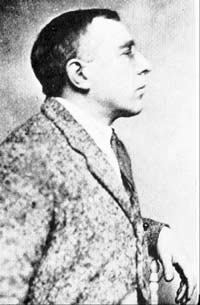
Beginning with a discussion of the idea of recurrence and its central place as a principal theme in Ouspensky's thought, Hunter frames the whole of Ouspensky's life in the context of his struggle against mechanical recurrence, a struggle to free himself to actualize his potential. Hunter explicitly acknowledges Ouspensky's debt to Gurdjieff in providing the means to develop an understanding of ideas he had already encountered, such as recurrence, and makes clear that, until he left, Ouspensky supported Gurdjieff's Institute for the Harmonious Development of Man and publicly deferred to him as his teacher and superior.
Examining Ouspensky's early writings, Hunter provides a useful inventory of his ideas to show how they differed from and paralleled those of Gurdjieff before they met. These works include Strange Life of Ivan Osokin (1905, first published in English in 1947), Tertium Organum (1909), Talks with a Devil (1916), and A New Model of the Universe (1931). In Ivan Osokin, for example, Hunter appraises such ideas as: man cannot do, to change anything you must change yourself, and nothing can be acquired without sacrifice. "The points of coincidence are so striking" [between these ideas and Gurdjieff's], Hunter admits, "that some readers have suspected that Ouspensky revised the novel's ending to have the magician represent Gurdjieff."
Hunter maintains that Tertium Organum "created the interest that made a way of transformation known as 'the Work' accessible to people in the Western world." While undoubtedly true for some, a far greater number had been exposed to a variety of theosophical readings from which they acquired a store of ideas. Ouspensky, well read in Theosophy, relied on his Theosophical contacts to help establish himself in England. And some Theosophists also mooted the speculation that Gurdjieff was a kind of messiah whose arrival had been promised by Madame Blavatsky. Theosophical ideas were supposed to have prepared an intellectual groundwork for the practical means Gurdjieff would bring. (As Blavatsky didn't give any practices, Theosophists now take Gurdjieff's.) In the version of the teaching delivered during the years Ouspensky was his pupil, Gurdjieff, while making clear that he considered Theosophy an incomplete, mixed teaching that could give only negative results, made use of theosophical terms which were familiar to many in his audience. Later, realizing that his efforts were not producing the results he anticipated, and beginning the writing of the First Series, Gurdjieff dropped this terminology entirely. More significantly, he enlarged upon the teaching given during his Russian period to the extent that Ouspensky's version of the teaching—necessarily based upon this Russian period—can only be thought to be introductory. Ouspensky himself contended to the end of his life that something was missing from the teaching and he was right but not in the way he believed.
It is the responsibility of a biographer to investigate all relevant aspects of his subject's life and especially the ideas he has propounded. In some areas Hunter fulfills this, in others not. For example, with Tertium Organum, Ouspensky's primary metaphysical work, Hunter admits he hasn't compared revised editions with the original first English edition. "A more dedicated researcher than the present writer," Hunter explains, "would seek out an original edition for comparison, but Ouspensky's integrity was such that it is unlikely any basic ideas were altered." Hunter's appeal to a belief in Ouspensky's integrity, no matter how well-founded that
belief might be, can only encourage a mythologizing of him while obscuring reality. The definitive way to nail down what Ouspensky knew before meeting Gurdjieff would have been to make the comparison. That Hunter fails to resolve questions such as this one, which can be settled definitively, raises a concern. Troubling also is an inconsistency in providing sources for various statements so it is difficult to find them for study in their original context.
The Devil in the Details
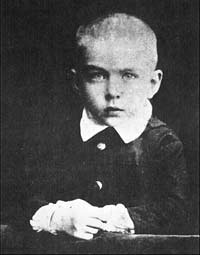
The impressions stamped in childhood are carried for a lifetime, but the impact of the early deaths of Ouspensky's parents and grandparents is passed by. Nor is much said about the impact on the 30-year-old Ouspensky of the political imprisonment and murder of his sister by the Russian authorities. The bare facts are summarized, but there is no examination of the consequences of these traumatic events as influences, say, on Ouspensky's concern with death and control, and his chief feature.
In terms of more abstract influences on his childhood development, Ouspensky has said that two books made a significant impression, one of them was Lermontov's Hero of Our Time. Lermontov is also mentioned in New Model of the Universe, where Ouspensky remonstrates that in all the literature on Lermontov to date, not a single attempt had been made to analyze a passage about higher levels of consciousness and being. Hunter's only comment regarding Lermontov's book is that it continued the "superfluous man" (literally, one who is extra, unneeded by society) theme initiated by Pushkin in Eugene Onegin. This idea is based in the standard critical canon of the book, which is irrelevant to what Hunter has maintained are Ouspensky's central interests. The principal themes of Hero of Our Time deal with, among others, multiple views of the same external events, with recurrence, with the appearance of spiritual growth where there is none. That Hunter soon after continues with a discussion of Ivan Osokin and fails to connect these themes with Osokin is puzzling.
Although Ouspensky's likely experimental use of narcotics to achieve higher states of consciousness is mentioned in passing, it is a subject that warrants further discussion. "Independent attempts in this direction [experimenting with narcotics]," taught Gurdjieff, "almost invariably produce negative results...." Despite the apparent objectivity of the rational mind, which can recognize that the opening to an experience of higher levels has been achieved by force and cannot be repeated without the drug, nevertheless, how can a portion of that experience not be taken over and put to use by "I's" in the service of an as yet untamed self-will? In this regard, could the use of drugs, likely nitrous oxide, have been a source of the vision and energy behind Ouspensky's formidable intellect to create Tertium Organum and so given him a false idea of himself? Is this why Gurdjieff tells him early on, "If you understood everything you have written in your own book, what is it called? I should come and bow down to you and beg you to teach me. But you do not understand either what you read or what you write. You do not even know what the word 'understand' means." And, later, when Ouspensky leaves Gurdjieff, could he have been unknowingly under the influence of an aspect of false ego that had been crystallized by the drug?
None of this is hidden. The facts of Ouspensky's life have been set out by several contemporary writers, as well as by Ouspensky himself. What Hunter emphasizes, along with what has been omitted, supports a mythologizing "cover story," perhaps a legitimizing of broken "lines" of work? What lessons can we learn from history if we do not squarely face such facts as Ouspensky's leaving Gurdjieff prematurely and within months Maurice Nicoll leaving Gurdjieff to follow Ouspensky?
Theory & Practice
Ouspensky made three breaks from Gurdjieff in his first nine years in the teaching. "The reason Ouspensky gave" [for his first break], Hunter says, "was that a student in such an organization could not disagree with his teacher, whom he had to obey in everything." But isn't this always the reason given for leaving prematurely? He also ventures a suspicion of Ouspensky's that Gurdjieff was leading him on the way of religion, after promising that he would not. Hunter deduces that to surrender unconditionally Ouspensky would have needed faith (religious in nature, the way of the monk), in contradiction to Gurdjieff's injunction not to accept anything on faith.
Another reason given is the "condition" mentioned by Gurdjieff, "...that before he can ascend to a higher step on the stairway of The Fourth Way a man must bring another man up to his own step. Thus a man becomes very dependent on a succession of other people for the possibility of self-development." This requirement, which Gurdjieff would later call "Trogoautoegocrat," is posited to have conflicted with Ouspensky's need for independence. Later in the book, the issue is raised again with regard to Ouspensky's refusal, after returning to London in January 1947, to meet with Gurdjieff (nor did Ouspensky's pupil Maurice Nicoll, whom Ouspensky had charged with leading his own groups in 1931). Nearing the end of his life, Ouspensky is thought to have refused the meeting because his more important, imperative inner task had to do with reinforcing his memory so as to free himself, given his belief in recurrence, to pass to a higher level next time. Oddly, Hunter speculates that "He [Ouspensky] could not know for certain whether his mysterious teacher or magician [still] needed to bring pupils to a higher level of development before he [Gurdjieff] could ascend further." Whatever Ouspensky's concern—this or the old idea that Gurdjieff was a "tainted channel"—he rejected the chance to rise to a higher level this time around through Gurdjieff.
Hunter also makes no mention of what Ouspensky referred to as "the St. Petersburg conditions," which simply was the task Gurdjieff gave Ouspensky to choose the people for the St. Petersburg groups and also be responsible for their behavior. When later Gurdjieff enlarged this to his being responsible for the behavior of all the people in the Work—irrational, on the face of it, but a way of breaking through to Ouspensky's emotional center—Ouspensky interpreted it conventionally.
Hunter agrees with the theory of J.H. Reyner in his Ouspensky: The Unsung Genius, that Ouspensky withdrew
when theory turned to practice, when the flow of new knowledge was cut off. Presenting Frank Pinder's estimate that, "Ouspensky knew the theory, better than anyone, possibly—he had the knowledge, but he did not understand," Hunter undercuts its relevance by ridiculing Pinder for describing Ouspensky as unconsciously assuming the role, in the Theosophical tradition, of successful religious teacher and for calling Maurice Nicoll and Ouspensky, "plagiarists of 'mystical' writings." Hunter has omitted that Pinder went on to refer to Ouspensky as a professional philosopher, a description much harder to refute.
Pinder, no lightweight, was Gurdjieff's second English pupil, chosen by him over Ouspensky to serve as translator to the English. He was entrusted with the care of the Prieuré when Gurdjieff went to America in 1924, and never sought the limelight as a teacher.
There is a strange insistence on the separation of theory from practice—that practice follows theory. In several places, practice is equated with dances and Movements. There seems to be no unwavering, explicit acknowledgment that self-remembering and self-observation are the basic practices without which none of the "theory," such as multiple "I's," considering, or the Law of Three, let alone the dances and Movements, has any transformative impact.
There is also no explicit recognition of the role in self-remembering of the experiencing of sensation, so this is understandable. Can it be that Ouspensky (and Hunter?) kept this aspect of the practice hidden from materials accessible to a general public. Was the idea to preserve the emotional shock that would be consequent on unveiling it after a long preparatory work? Or is the essential connection unrecognized? If the former, in Hunter's case, the secrecy is irrelevant, since the practices have become public knowledge with the publication of books such as Jean Vaysse's Toward Awakening in 1978, or, more recently, John Pentland's Exchanges Within.
Abandoning Whose System?
In discussing Ouspensky's apparent abandonment of "the System" at the end of his life, Hunter tries to make clear that these statements were an expression of the vision of a man who had moved to a higher level of being. Unfortunately, the language used in the discussion, that of "a new beginning," of rebuilding "based on their own needs and understanding," and reconstructing "everything for oneself," leaves the door temptingly open for all manner of deviations (as happened with Boris Mouravieff and, more recently, his latter-day disciple Robin Amis). And most importantly, there is no unequivocal recognition that Ouspensky was speaking to his own students, trying to shock people he now saw had come to a dead end, with talk of abandoning the System. The system they were to abandon was Ouspensky's—not Gurdjieff's.
To show that Ouspensky never imagined himself larger or more important than the System or Gurdjieff, Hunter invokes a metaphor of the moon, four hundred times smaller than the sun, periodically eclipsing it, suggesting that Ouspensky, having a sense of true scale, recognized himself as a moon. However, for a great many, it's just the reverse—Gurdjieff lives in Ouspensky's shadow. Their first contact is with one of the broken "lines" and they take it as the equal of Gurdjieff's teaching, or worse, as a "developed" improvement.
After the failure of the Prieuré, Hunter sees Gurdjieff as deviously implementing his "grand strategy" by helping to start "another Fourth Way School in England"—Ouspensky's. But Ouspensky had already broken with Gurdjieff eight months before and had started his own groups. These efforts of Ouspensky's are always cast as making a positive contribution to the spread of the Work, sometimes lesser, sometimes greater.
Never considered is the possibility that Gurdjieff simply was doing his best to help Ouspensky, such as by sending Mme Ouspensky to him to work with his groups. Rather than a devious plan, isn't it more logical to see that Gurdjieff was making the best of a bad situation and continuing to make efforts to effect Ouspensky's transformation? Gurdjieff needed "helper-instructors" to spread the teaching, not rival groups or would-be teachers. In this regard, although Hunter mentions Jane Heap's being directed by Gurdjieff to teach in England, he doesn't see this as a message that Ouspensky was heading in the wrong direction. Interestingly, although without attribution, Hunter says Heap applied to Ouspensky for admission to his groups [probably as a way of monitoring what he was doing], and was turned down as a lesbian.
Avoided completely is the question of the negative impact of Ouspensky on the spread of Gurdjieff's teaching. Has it been of no consequence that the customs of the Work have come to be defined for so many by the context of the teaching situations set up by Ouspensky? Terry Winter Owens, a student of Willem Nyland, points out that many people came to the teaching having read Ouspensky, wanting to learn how not to express negative emotions. Nyland considered that Ouspensky had many things wrong, that this practice was an invention, or at least an exaggeration. Instead, Nyland suggested to "...observe the emotional reaction in the 'playground' of the body, and perhaps, were one awake and impartial enough, to intentionally participate in the outward manifestation—of course within the bounds of common sense." Nyland was concerned that suppressing negative emotions could lead to students remaining "as deadasleep and identified as a poker-faced card player," perhaps a reason for the long faces reported to be customary for so many in Ouspensky-influenced groups. "In support of his disagreements with Ouspensky," continues Owens, "Nyland would often cite passages from All and Everything and relate it to instruction he received directly from Gurdjieff and Orage. He urged everyone to read All and Everything at least three times, as directed by Gurdjieff, and then to keep reading it and studying it. He said that All and Everything was a road map for Work."
A Complete Teaching
Discussing the meaning to Ouspensky of the word "fragments," and his search for schools, Hunter raises the questions that Ouspensky might have thought: 1) Gurdjieff hadn't all the knowledge; 2) he hadn't passed all of it on; 3) Ouspensky might have only understood a part. The first possibility is evidenced by Ouspensky's ongoing search for external sources from which he believed Gurdjieff had become estranged. Hunter doesn't fully engage the reactive, defensive side of this quest, which would involve the third possibility. The question is important since these reasons may have been what stalled Ouspensky from reaching a higher level of development until the end of his life. If so, would not an examination of this powerful buffer be worthwhile for any student of the Work?
As to the second, Hunter agrees with Beryl Pogson's idea as presented in her 1995 book, Centenary Fragments, that the presentation of the Work must always be in fragments and it's the student's work to assemble the whole. Her teacher, Nicoll, probably discussed the idea with Ouspensky, who wrote of it in the first draft of Search, but did not include it in the published edition. Wrote Ouspensky:
In this connection I wish to describe the conditions in which I had to work and collect the material set forth in this book. To begin with, it must be noted that acquiring knowledge from G. was utterly different from anything we are accustomed to in the region of intellectual study; G. did not teach us in the usual sense of the word, did not give any systematic explanations, did not help us when we felt that we could not ourselves understand clearly the ideas which he threw out to us. On the contrary, he seemed to be guarding his knowledge from us, trying at every moment to give as little as possible and that in the vaguest and most incomprehensible form, and at the same time demanding that we should decipher the meaning of what he was saying by ourselves and piece together the fragments of ideas which he never gave as a coherent whole. Sometimes he did not even speak in sentences, but merely dropped two or three words, leaving us to guess what they meant. If he did speak or explain something, he never repeated what he said. Sometimes he deliberately made mistakes and did not allow those who saw them to correct him. This happened for instance when he was explaining the meaning of the 'cosmoses.'
She might also have gotten the idea from The Fourth Way, a collection of questions asked of Ouspensky, along with his answers, which was published in 1957, 10 years after his death. It's odd that Hunter doesn't cite this earlier source.
Given the previously discussed silence about how and whether the practices of self-remembering and self-observation did or did not inform Ouspensky's understanding of theory, along with the equivocal discussion of "fragments," it's likely that for Hunter the completeness of the teaching remains in question. What Gurdjieff as he appeared when Ouspensky was yet a student Gurdjieff told Ouspensky certainly bears repeating in this context: "The teaching whose theory is here being set out is completely self-supporting and independent of other lines and it has been completely unknown up to the present time." Despite Ouspensky's high valuation of the teaching, his search for some other source or connection than Gurdjieff is evidence that he did not accept the truth of Gurdjieff's statement about the teaching.
Working with Emotion
Ouspensky's often unrecognized emotionality is amply explored and demonstrated in the context of his work with his pupils and his ambivalence toward Gurdjieff. But the negative emotions he experienced toward Gurdjieff are not seen as a crucial work that Ouspensky missed—he allowed them to arise again and again without "eating" them. As with many other of Ouspensky's shortcomings, Hunter's discussions of contributing influences allow a reader to focus on the external situations. As with Reyner, who saw that "the tragedy of Ouspensky's life lay in his inability to recognize this opportunity," that moment when a free choice is possible—Hunter's discussions also focus on the cost to Ouspensky, not the cost to the Work.
Of the extraordinary events that took place between him and Gurdjieff late one evening in Finland in 1916, Ouspensky wrote:
Finally, at the moment of what felt like the climax of contradictions and of inner turmoil, there flashed through my mind a thought following which I very quickly came to a clear and right understanding of all G. had said and of my own position. I saw that G. was right; that what I had considered to be firm and reliable in myself in reality did not exist. But I had found something else. I knew that he would not believe me and that he would laugh at me if I showed him this other thing. But for myself it was indubitable and what happened later showed that I was right.
Ouspensky has forgotten what he recorded elsewhere, that:
One must understand the law. There is, as it were, a separate account kept for every man. His efforts and sacrifices are written down on one side of the book and his mistakes and misdeeds on the other side. What is written down on the positive side can never atone for what is written down on the negative side. What is recorded on the negative side can only be wiped out by the truth, that is to say, by an instant and complete confession to himself and to others and above all to the teacher. If a man sees his fault but continues to justify himself, a small offense may destroy the result of whole years of work and effort.
Hunter relates the incident, commenting only that the something must have been "exceedingly sensitive in Ouspensky's nature or psychology," that is, in his essence or his personality. Ouspensky's characterization of the moment as "what felt like the climax of contradictions and of inner turmoil," signals the moment as one in which, with the leaven of self-remembering, a higher level of vibration is possible, a "clear and right understanding." It seems likely that Ouspensky enters it when he sees the truth of what Gurdjieff has shown him of his position (and this is confirmed when Ouspensky later speaks of the consequent weakening of what he sees as his chief feature, "extreme individualism"). But why then must he withhold from Gurdjieff a part of what he found? Is it essence that requires protection from Gurdjieff's imagined laughter? Or is it personality? As has been pointed out elsewhere, this withholding marks a breach in the relationship between teacher and student, one from which that relationship would never recover. And the question also arises: if Ouspensky's relationship with his teacher could be tainted by insincerity, does this insincerity appear elsewhere?
As the Finland exchange unfolds, Gurdjieff soon makes another effort to create conditions in which Ouspensky might break through, asking him something that "put a stop to all my thoughts and feelings. It was not fear, at least not a conscious fear when one knows that one is afraid, but I was all shivering and something literally paralyzed me completely so that I could not articulate a single word although I made terrible efforts, wishing to give an affirmative reply." A perfect description of a moment on the razor's edge between stepping back into personality, into "Ouspensky," and letting go to answer from being. Again, sadly, Ouspensky cannot surrender and have the transition completed.
And again Gurdjieff tries, this time with a smiling demeanor, calling Ouspensky to sit a while with him. But again Ouspensky backs off, this time into the thinking center. "I sat with him but I could say nothing, nor did I want to talk. At the same time I felt a kind of extraordinary clarity of thought and I decided to try to concentrate on certain problems which had seemed to me to be particularly difficult. The thought came to my mind that in this unusual state I might perhaps find answers to questions which I could not find in the ordinary way." To remark on these failures is not to condemn or judge Ouspensky, for who among us, in far, far lesser circumstances, has not backed away from the moment? But if we are to appreciate his genuine accomplishments in a real way and form a clearer picture of the history of the Work, the situation must be seen clearly, without euphemism. That Gurdjieff hasn't condemned Ouspensky for these rejections is made clear when Gurdjieff tells him at the moment he most wants to get rid of all these discordant experiences—"This is what you wanted, make use of it. You are not asleep at this moment!" Who can read these passages without a sense of poignancy, as if Ouspensky had set them down hoping for someone to call him to their meaning? We can only wonder how the Work might have developed if Ouspensky had been able to unconditionally set aside "Ouspensky."
Who Is Gurdjieff?
Hunter quotes Dr. James Carruthers Young, a friend of Nicoll and a well-regarded physician, whose idea of Gurdjieff was based on what Ouspensky had led him to expect, "...a remarkable man called Gurdjieff whom he had known in Moscow as the composer of an original kind of ballet...he had an intimate acquaintance with monastic life...he had acquired an unrivalled knowledge and repertoire of their religious exercises and dances, and a profound understanding of their application to psychological development...."
This is consistent with what Hunter reports of Ouspensky's first impression of Gurdjieff. "What he perceived of Gurdjieff tallied in general with most people's first impressions, particularly the eyes' piercing quality; and the impression that in this penetrating gaze his whole Being had been assessed." Actually, Ouspensky says nothing about Gurdjieff's being, with or without the capital letter. Ouspensky wrote, "I saw a man of an oriental type, no longer young, with a black mustache and piercing eyes, who astonished me first of all because he seemed to be disguised and completely out of keeping with the place and its atmosphere." What is most disconcerting about Ouspensky's account is that he doesn't mention anything about the depth of Gurdjieff's presence, an impression that forcibly struck most others.
Here we encounter perhaps the central question that must be addressed if we are to rightly place Ouspensky's role in the Work. Who is Gurdjieff? Was he an extraordinary man among men? An outstanding teacher among teachers? Or was he something more? The attempts to divorce Gurdjieff from the teaching, as if he did not embody it, and as if it were simply a body of knowledge that could be added to by later workers in the field, compromise the wholeness, the completeness of what Gurdjieff brought as a way of transformation. They disguise the self-will of these more contemporary, more "objective" purveyors of the Work.
It is in the final chapter—the most moving of the book—that Hunter takes up the question, but at one remove. He summarizes the whole of Ouspensky's life with broadly viewed interpretations of what faith, what contacting a higher source, might have meant to him, weighing the plusses and minuses of Ouspensky's life, bringing a discussion of being into the foreground, and taking the significant step of making clear that he, Hunter, regards Gurdjieff as the master rather than as Ouspensky's equal. Hunter expresses a genuine, heartfelt appreciation of Gurdjieff's teaching, but he goes no further than the edge of the precipice. Without Gurdjieff would there be a Work at all for us to struggle to know? To take Gurdjieff as more than a teacher, as the carrier of a new teaching for mankind, as even a Messenger from above, is to put in question again all of Hunter's reasoning.
Notes
(1) Idea of recurrence. Bob Hunter, P. D. Ouspensky: Pioneer of the Fourth Way (The Netherlands: Eureka Editions, 2000), p. 5.
(2) Points of coincidence. Ibid., p. 15.
(3) Lermontov. P. D. Ouspensky, A New Model of the Universe (New York: Knopf, 1946), pp. 414–15.
(4) Superfluous man. Ibid., p. 12. In Eugene Onegin, Pushkin created the dea of the "superfluous" man. Well-educated, a nobleman whose needs are satisfied by his serfs, full of energy and desire, but unable to act because he is cut off from the heart and soul of Russia and himself, he is superfluous to life, useless and spiritually empty.
(5) Narcotics. See Hunter, op. cit., pp. 24–5.
(6) Independent attempts. Beryl Pogson (Compiled by Lewis Creed), Centenary Fragments (York: Quacks Books, 1995).
(7) You do not understand. P. D. Ouspensky, In Search of the Miraculous (New York: Harcourt, 1949), p. 20.
(8) Several contemporary writers. Colin Wilson, The Strange Life of P. D. Ouspensky; J.H. Reyner, Ouspensky: The Unsung Genius; James Moore, Gurdjieff: The Anatomy of a Myth; William Patrick Patterson, Struggle of the Magicians.
(9) Obey in everything. See Hunter, op. cit., p. 105.
(10) The "condition." Ibid., p. 90.
(11) Requirement. For more, see the First Series, particularly the ceremony in which Beelzebub is reinstated and honored.
(12) Speculates. See Hunter, op. cit., p. 221.
(13) St. Petersburg conditions. William Patrick Patterson, Struggle of the Magicians, 2nd Ed. (Fairfax, Calif.: Arete Communications, 1998), pp. 25, 233.
(14) Ouspensky knew the theory. See Hunter, op. cit., pp. 135–36. As reported in C.S. Nott, Journey Through This World (New York: Samuel Weiser, 1969), Pinder goes on to say that, "Ouspensky, for all his great brain, was, for what was real, unintelligent; and it was inevitable that Ouspensky should cut himself and his pupils off from Gurdjieff. It is strange that there can be talk of 'Ouspensky's Teaching,' and 'Gurdjieff-Ouspensky'; the Teaching is Gurdjieff's." p. 91.
(15) Pinder. James Moore, Gurdjieff: The Anatomy of a Myth (Rockport, Mass.: Element, 1991), pp. 358–59.
(16) Separation of theory from practice. See Hunter, op. cit., pp. 107, 127, 153, 183, 193.
(17) Helper-instructors. G. I. Gurdjieff, Life Is Real Only Then, When "I Am" (New York: Triangle Editions, 1978), p. 28.
(18) Negative emotions. Terry Winter Owens, "A Remembrance of W.A. Nyland," Gurdjieff International Review, Vol. III, No. 2, p. 17.
(19) Questions. See Hunter, op. cit., p. 153.
(20) Conditions in which I had to work. Sterling Library, Yale University.
(21) Gotten the idea. P. D. Ouspensky, The Fourth Way (New York: Knopf, 1957), pp. 402–3.
(22) Completely self-supporting. See Ouspensky, Search, op. cit, p. 286.
(23) The law. Ibid., pp. 230–31.
(24) Pointed out elsewhere. See Patterson, op. cit., pp. 25, 91, 233.
(25) Expectations of Gurdjieff. See Hunter, op. cit., p. 139.
(26) A man of an oriental type. See Ouspensky, Search, op. cit., p. 7.
This review is from The Gurdjieff Journal Issue #26


